Residential
Residential Mold Remediation
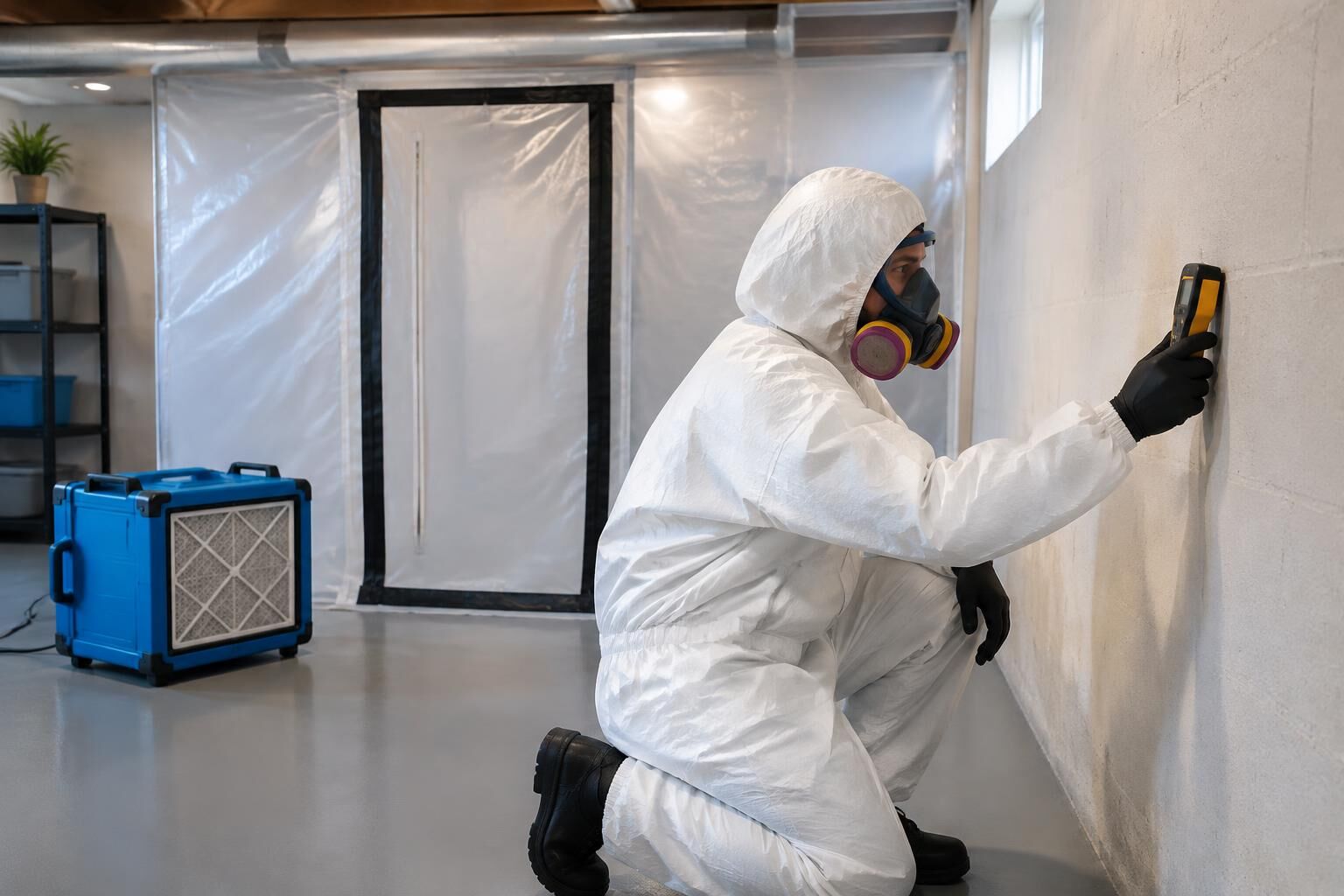
Common Warning Signs
- Musty or earthy odors that linger
- Staining or discoloration on walls, ceilings, or floors
- Recurring condensation on windows or pipes
- Bubbling, peeling, or cracking paint
- Damp or soft building materials
- Growth in moisture-prone areas like basements and bathrooms
Appearance alone doesn't tell you the type of mold or its health impact. An inspection focuses on moisture and extent; lab analysis is the only way to identify species.
Areas We Work In
- Basements
- Bathrooms
- Kitchens
- Attics
- Crawlspaces
- Laundry rooms
- Garages
- Bedrooms
- HVAC-adjacent areas
Our process
How Residential Remediation Works
- 1Inspection of affected and adjacent areas
- 2Moisture-source identification
- 3Plain-language scope explanation
- 4Containment to protect the rest of the home
- 5Air control and HEPA filtration
- 6Material removal or cleaning as appropriate
- 7Drying and dehumidification
- 8Final detailed cleaning
- 9Walkthrough review with you
- 10Prevention guidance for the future
Trust
Why Homeowners Call DryShield
IICRC Certified
Licensed & Insured
Same-Day Service
Moisture-Source Focus
Respect for Your Home
Clear Communication
FAQ
Homeowner Questions
Can we stay home during remediation?
Often, yes. Many residential projects are contained to one area so the rest of the home stays usable. We'll discuss the specifics for your project, including any rooms to avoid while work is underway.
How long does it take?
Small contained projects may take a day or two; larger projects with drying can take longer. We give you a realistic timeline once we've seen the area and checked moisture levels.
What happens to my belongings?
We'll talk through items near the affected area before work starts. Contents may be moved, protected, or cleaned depending on the situation.
Will the mold come back?
No one can honestly guarantee that. Recurrence is mostly about moisture, so we focus on finding the source and give you practical steps to keep the area dry.
Will insurance cover it?
It depends on your policy and the cause. We can provide documentation of the work, but your insurer makes coverage decisions.
Do I need mold testing?
Not always. Visible growth tied to a known moisture problem can usually be addressed without lab testing. If you need species identification or independent verification, a third-party lab or consultant is the right choice.
Mold Concern, Moisture Problem, or Active Water Damage?
Call or text 24/7 for emergencies, or schedule a free inspection. Same-day service is available.